
a Used Car Guide
Trying to decide between leasing vs buying a used car. This guide explains how each option works, who benefits most, and how total cost of ownership compares over time. You will learn about payment structure, mileage limits, warranty coverage, and what happens at the end of a lease or loan. We also outline how credit scores affect approval, why certified pre owned vehicles can change the math, and how to estimate depreciation on popular segments like sedans, SUVs, trucks, and hybrids.
As you compare options, explore resources like used inventory, financing choices, and helpful research on best value models. If you want to understand insurance, taxes, and service plans for used vehicles, you will find practical tips here too. Use this page to make a confident and informed choice for your next vehicle.
Leasing a used car can lower monthly payments and reduce sales tax in many locations, while buying a used car can build long term equity and remove mileage limits. Your ideal choice depends on driving habits, budget, credit, and ownership goals. Keep reading for side by side pros and cons, simple calculators, and real world scenarios. You can also connect these insights with our financing, trade in, and research tools for a complete plan.
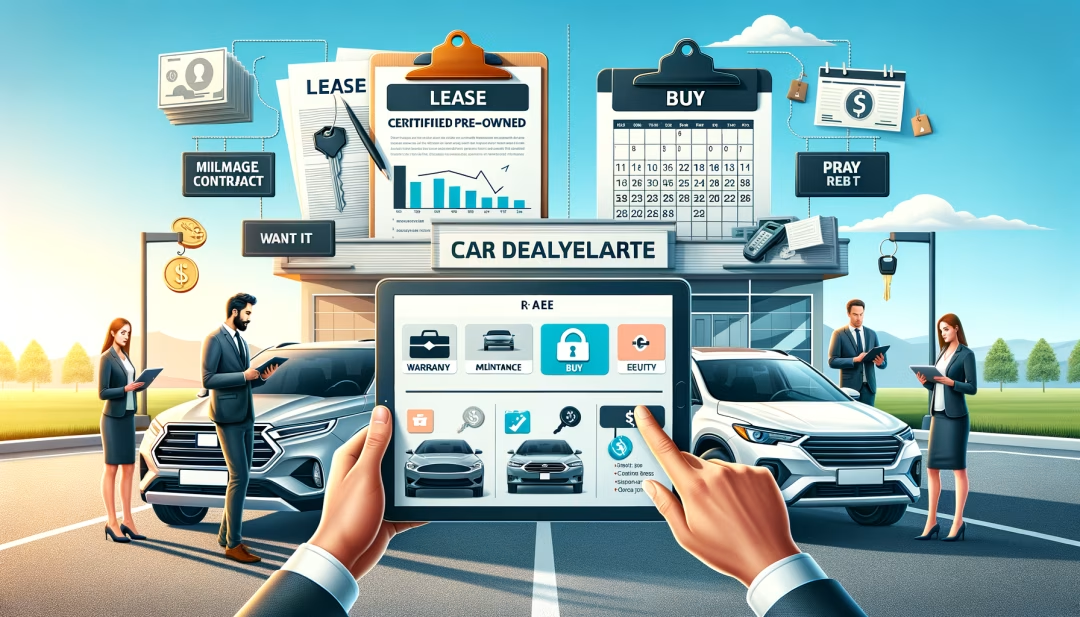
Leasing vs Buying a Used Car Explained
Both leasing and buying used aim to reduce the cost of driving compared to new vehicles. The right decision depends on how long you keep cars, how many miles you drive per year, your cash flow, your credit profile, and how much flexibility you want. Below, we break down how each path works, the core differences, and ways to compare total cost of ownership with simple rules of thumb. We also link to helpful resources across our site to make your research easier.
How Leasing a Used Car Works
Leasing a used car looks similar to leasing a new one, but the vehicle is pre owned. Your payment is based on the difference between the vehicle value at lease start and its projected value at lease end, plus fees, taxes, rent charge, and service add ons if selected. Used leases are often available on late model vehicles, especially certified pre owned models, where condition and warranty coverage are easier to verify. At the end of term, you can return the car, buy it for the residual value, or move into another vehicle.
How Buying a Used Car Works
When you buy, you either pay in full or finance the purchase price minus any down payment and trade in value. Your payment covers principal and interest, and once the loan is paid off the car is yours with no monthly payment. You decide when to sell or trade, and you are not limited by mileage terms. Many buyers pair a used purchase with a service plan or extended warranty to manage repair risk. Learn more on how financing works at how-does-used-car-financing-work and how-to-finance-a-used-car.
Quick Pros and Cons
- Used Lease Pros. Lower monthly payment compared to financing the same car. Potentially lower sales tax. Frequent vehicle updates. Possible warranty coverage on certified pre owned units.
- Used Lease Cons. Mileage limits and wear charges. No equity unless you buy the vehicle at lease end. Early termination fees can be significant.
- Used Purchase Pros. You build equity. No mileage limits. Flexibility to customize or sell anytime. Often lowest cost over a long horizon when you keep the car well maintained.
- Used Purchase Cons. Higher monthly payment than a lease on the same car. Repair costs may rise as the vehicle ages unless covered by a warranty plan.
Cost of Ownership Basics
Think of total cost as payment plus taxes plus insurance plus fuel plus maintenance and repairs minus resale or equity. A lease can look cheaper per month because you pay only for expected depreciation, not the entire vehicle price. Buying can be cheaper over longer horizons because the vehicle keeps value and payments end. To fine tune the comparison, consider your annual mileage, how long you plan to keep the car, and your risk tolerance for repairs. For help estimating trade in value and equity, visit value-my-trade and used-car-trade-in-guide.
Who Should Consider Leasing a Used Car
- Drivers who want newer features every two to four years and prefer predictable payments.
- Lower mileage commuters who can stay under the annual allowance with a cushion.
- Shoppers who want warranty coverage and like the structure and simplicity of a lease.
Who Should Consider Buying a Used Car
- Drivers who plan to keep a vehicle five to ten years and value long term savings.
- High mileage travelers who do not want mileage penalties or lease wear charges.
- Shoppers who want customization flexibility and control over resale timing.
Warranty and Vehicle Condition
Warranty coverage can be a major tie breaker. Certified pre owned programs often include extended limited coverage and roadside assistance, which can make a used lease more attractive by reducing repair risk. If you buy used, you can pair the purchase with an extended service contract. To understand differences, review certified-pre-owned-vs-used and used-car-warranty-guide. For proactive care, schedule-service offers help with maintenance so your car stays reliable and valuable.
Mileage and Wear Considerations
Lease contracts include a mileage allowance. If you exceed it, per mile fees apply. Moderate to high mileage drivers may be better off buying to avoid charges. Normal wear is allowed, but excessive wear can trigger fees at lease end. If you are careful with parking, interior care, and maintenance, a lease can remain cost effective. If your lifestyle includes pets, gear, or rough roads, ownership may be the safer choice. Explore best-used-cars-for-pet-owners or best-used-vehicles-for-outdoor-adventures to match your needs.
Insurance, Taxes, and Fees
Insurance costs are influenced by vehicle type, age, and coverage level required by lenders or lessors. Leases may require higher coverage limits. Taxes vary by state. Some regions tax only the lease payments rather than the full vehicle price, which can improve lease affordability. When you buy, you typically pay sales tax on the full purchase price at registration, subject to local rules. Review your location details at locations for local guidance and consult privacy-policy, terms, and visitor-agreement for policy information.
Credit Score and Approval
Credit history helps determine approval and the finance or rent charge. Improving your profile before you apply can lower costs. Learn about credit needs and rates at what-credit-score-is-needed-to-finance-a-used-car and used-car-loan-interest-rates. If you are ready to begin, visit applications to start the process and payment-options to explore structures that align with your budget.
End of Term Options
At lease end you usually can return the vehicle, buy it at a set residual price, or roll into another vehicle. If the market value is higher than the residual, buying the leased car can be a smart move. When you own, your end of term is your choice. You can keep the car, trade it, or sell it private party. Check value-my-trade for a quick estimate and used-cars-with-best-resale-value to see models that tend to hold value.
Simple Comparison Framework
- If you drive under 12,000 miles per year, want a late model vehicle with warranty coverage, and value the lowest monthly payment, a used lease can be ideal.
- If you plan to keep a car more than five years, drive more than 15,000 miles per year, and want maximum flexibility, buying used is often the best long term value.
Example Scenarios
City commuter. You drive 8,000 miles per year, prefer the latest safety features, and want predictable costs. A used lease on a recent compact or midsize sedan can keep payments low with strong value. See best-used-commuter-cars and used-cars-with-high-mpg for ideas.
Growing family. You need space and flexibility and you plan to keep the vehicle for many years. A purchased three row SUV or minivan can deliver strong long term savings with no mileage limits. Explore best-used-3-row-suvs and best-used-minivans to compare options.
Weekend adventurer. You want towing capacity or off road capability. Buying a used truck or SUV and adding a service plan can provide durability and freedom to customize. Look at best-used-vehicles-for-towing, best-used-trucks-for-work, and used-cars-known-for-durability.
Research and Inventory Tools
Browse our used-inventory to compare prices, features, and mileage. You can review sold-inventory to see market activity and pricing trends, and check used-car-price-trends or used-car-market-trends for context. When you find candidates, schedule-a-test-drive to experience comfort and visibility, and visit how-to-check-used-car-history for tips on vehicle reports and inspections. If you are comparing body styles, see best-used-suvs, best-used-sedans, and best-used-trucks. For budget filters, review best-used-cars-under-15000, best-used-suvs-under-20000, and best-used-trucks-under-20000.
Financing Tips and Payment Planning
Know your budget before you decide. Use payment-options to preview structures and how-much-down-payment-for-used-car to estimate cash needs. If you want to reduce interest, see how-to-refinance-a-used-car-loan later in ownership. For credit building and approval strategies, read how-to-get-approved-for-a-used-car-loan and can-you-finance-a-used-car-with-bad-credit. If you are comparing lease versus finance more broadly, see should-you-buy-or-finance-a-used-car for an expanded discussion.
Insurance, Protection, and Service
Whether you lease or buy, protection plans can stabilize costs. Explore used-car-warranty-guide, extended-warranty-for-used-cars, and used-car-gap-insurance-explained. A consistent maintenance schedule helps control long term expense and supports strong resale. Use schedule-service to plan routine care.
Common Myths
- Myth. Leasing always costs more. Reality. Monthly cash flow can be lower on a lease. Long horizon cost can favor buying, but not in every case.
- Myth. You cannot lease a used car. Reality. Many lenders support used leases, especially on certified pre owned vehicles.
- Myth. Buying always means high repair bills. Reality. With smart model selection and service plans, repair risk can be managed very well.
Helpful Resources
Frequently Asked Questions
Next Steps for Your Research
Build a shortlist in used-inventory, compare long term ownership picks like most-reliable-used-cars, most-reliable-used-suvs, and used-cars-with-lowest-maintenance-costs, and read how-to-buy-a-used-car and used-car-buying-checklist for a step by step approach. Visit research-page-template for model guides, schedule-a-test-drive when you are ready to evaluate comfort and visibility, and explore applications if you want to start financing. For store details or test routes, see locations and meet-our-staff. If you have questions, our blog and contact-us pages provide more insights and ways to connect.
Office Hours
Monday
Tuesday
Wednesday
Thursday
Friday
Saturday
9:00 am - 5:00 pm
9:00 am - 5:00 pm
9:00 am - 5:00 pm
9:00 am - 5:00 pm
9:00 am - 5:00 pm
Closed
