
Features, and Buying Guide
Shopping for the safest used trucks means looking beyond paint and payload to the protections built in. This guide explains how to read crash test ratings, which advanced safety features matter most, and how to verify equipment on a specific VIN. We highlight popular models and years known for strong safety performance, plus practical tips to assess condition and driver assist technology before you buy. You will also find links to research resources, ownership insights, and model comparisons so you can choose confidently for work, family, towing, and winter driving. Explore complementary pages like safest-used-suvs, most-reliable-used-trucks, and best-used-trucks-for-work for deeper guidance. Whether you prefer midsize for maneuverability or full size for capability, the right mix of structure, airbags, and active safety can turn a solid truck into a standout safety pick.
Safety in a used truck starts with verified ratings and continues with the right options and condition. Compare IIHS and NHTSA results, confirm driver assist features by VIN, and inspect brakes, tires, lighting, and frame. Use our research pages like used-cars-with-best-safety-ratings, browse used-inventory, review payment-options, and plan service with schedule-service to keep safety tech performing at its best.
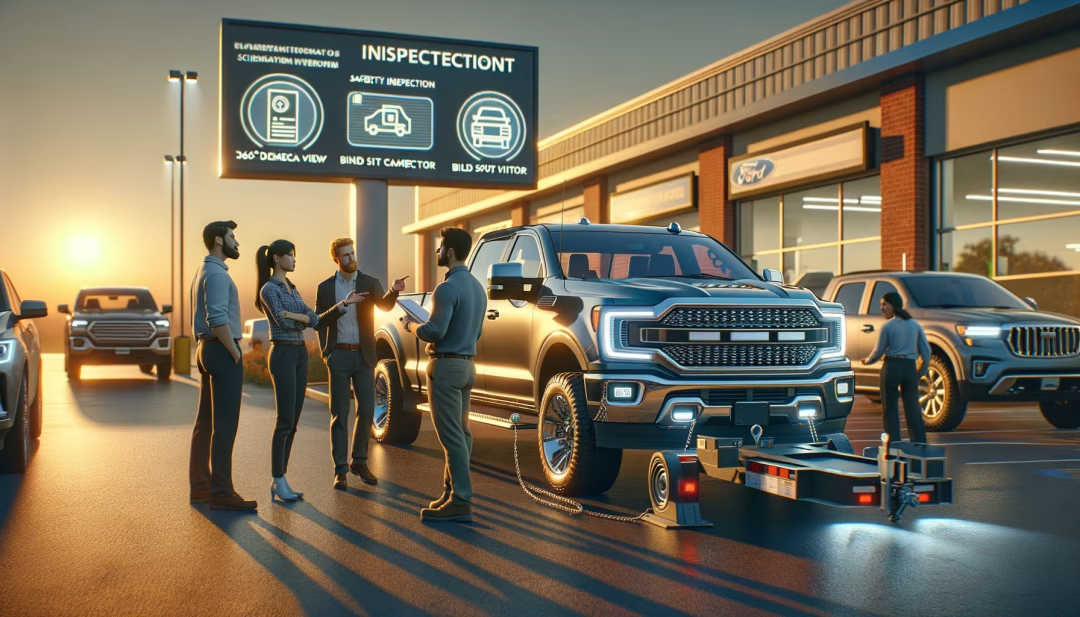
What Makes a Used Truck Safe
Safety is both structural and smart. Look for trucks with strong crash structures and comprehensive airbags, and prioritize driver assistance that can prevent or lessen a collision. Ratings from the Insurance Institute for Highway Safety and the National Highway Traffic Safety Administration help you compare performance across crash modes. Features like automatic emergency braking, blind spot monitoring, lane keeping assistance, rear cross traffic alert, and a 360 degree camera add crucial awareness around a tall, long vehicle. For towing or hauling, trailer sway control and an integrated trailer brake controller improve stability and stopping distances.
- Crash test scores from IIHS and NHTSA on the specific body style and year
- Airbags including side curtain coverage for both rows when applicable
- Automatic emergency braking with pedestrian detection where available
- Blind spot monitoring with rear cross traffic alert and trailer coverage options
- Electronic stability control, trailer sway control, and roll stability features
- LED or HID headlights that earn good test results for visibility
- Front and rear parking sensors, 360 camera, and large towing mirrors
Popular Used Trucks With Strong Safety Reputations
Safety equipment and scores vary by model year, cab style, and options. Always confirm by VIN before purchasing. The following nameplates are frequently recommended for their available safety technology and structural performance when properly equipped.
- Ford F-150 - Many 2018 to 2021 models offer Co-Pilot360 with pre-collision assist, lane keeping, blind spot, rear cross traffic alert, and available 360 camera. Aluminum body with strong crash results in well equipped trims.
- Ram 1500 - 2019 to 2021 trucks added advanced driver aids and improved crashworthiness, with available adaptive cruise and active lane management on higher trims or safety packages.
- Chevrolet Silverado 1500 and GMC Sierra 1500 - 2019 to 2021 models with Driver Confidence or Safety Package can include automatic emergency braking, lane keep assist, and surround vision.
- Toyota Tundra - Later years commonly include Toyota Safety Sense with pre-collision braking and lane departure alert. Known for robust build and predictable handling when maintained.
- Nissan Titan - Models with Safety Shield 360 add blind spot, rear cross traffic alert, and automatic emergency braking, improving daily confidence in traffic and parking.
- Midsize picks - Honda Ridgeline with Honda Sensing, Toyota Tacoma with Toyota Safety Sense, Ford Ranger with Co-Pilot360, and Chevrolet Colorado or GMC Canyon with active safety options.
For model comparisons across capability and comfort, see best-used-trucks, explore budget focused picks like best-used-trucks-under-20000, or consider seasonal needs with best-used-vehicles-for-winter-driving.
How to Verify Safety on the Exact Truck
Two trucks of the same year can differ in safety based on options. Confirm the exact build to avoid assuming features are present.
- Decode the VIN - Request the factory window sticker or build sheet listing driver assists, airbags, and lighting. Many manufacturers provide online VIN lookup for features and recalls.
- Check crash ratings - Visit IIHS and NHTSA websites and match cab style, drivetrain, and year. Confirm headlights rating and frontal small overlap results where available.
- Confirm recall status - Search recalls by VIN and ensure all safety campaign work is completed before delivery.
- Sensor and camera test - On a test drive, verify that forward collision alert, lane keeping, blind spot indicators, and the 360 camera display function correctly with no warning lights.
Safety Inspection Checklist for Used Trucks
Condition plays a big role in real world safety. Even the best ratings cannot compensate for worn tires, weak brakes, or misaligned frames. Use this checklist during evaluation and before ownership.
- Tires - Ensure matching load rating, adequate tread depth, and even wear. Replace older or mismatched sets to improve braking and grip.
- Brakes - Inspect pads, rotors, and fluid. Test pedal feel under repeated stops. Trucks that tow benefit from upgraded pads and fresh fluid.
- Suspension and steering - Check ball joints, tie rods, shocks, and alignment. A tight chassis improves stability in emergency maneuvers.
- Lighting - Confirm all headlight beams, fog lights, brake lights, and trailer wiring work. Consider upgraded bulbs or housings if visibility is poor.
- Airbags and seat belts - Look for deployed airbag history, ensure seat belts latch and retract cleanly, and verify child seat anchors are intact where applicable.
Plan maintenance with schedule-service and review ownership tips on blog. If you are comparing purchase structures, visit payment-options and consider trade estimates on value-my-trade.
Safety Features That Matter Most
Focus on features that help prevent common truck related incidents such as front to rear collisions, lane departure, blind spot conflicts with tall beds, and parking scrapes with long wheelbases. For frequent towing, prioritize systems that extend awareness around a trailer.
- Automatic emergency braking with pedestrian detection - Reduces impact speed or can avoid a collision in traffic.
- Blind spot monitoring with trailer coverage - Expands the monitored zone to include trailer length when properly configured.
- Lane keeping assist and lane departure warning - Helps reduce drift related sideswipes and rural road run offs.
- Rear cross traffic alert and parking sensors - Simplifies backing in crowded lots where bed height blocks low objects.
- 360 degree camera with trailer assist views - Aids hitch alignment and low speed maneuvering near curbs and posts.
Towing and Hauling Safety
A safe towing setup is correctly sized and properly controlled. Match truck ratings to trailer weight, distribute load evenly, and use the right hitch hardware. Electronic trailer brake controllers and tow or haul modes coordinate downshifts and braking to maintain stability. Trailer sway control applies corrective braking when oscillation starts. Extended or spotter mirrors give a clear lane view around the trailer. When loading beds, secure cargo to prevent shifts that destabilize handling.
For more capability focused research, see best-used-vehicles-for-towing, best-used-vehicles-for-hauling, and seasonal picks like best-used-cars-for-snow.
Winter and Off Road Considerations
Four wheel drive, all wheel drive, or selectable traction modes add confidence in snow and on trails, but tires remain the biggest factor. Winter rated tires transform stopping distances on ice and packed snow. Hill descent control and locking differentials help maintain low speed traction on steep or uneven terrain. Skid plates and recovery points are useful for frequent trail driving. In cold climates, remote start and heated mirrors improve visibility and comfort so you can focus on road conditions.
Explore more cold weather guidance at best-used-vehicles-for-winter-driving and family friendly options at best-used-family-cars if a truck will double as the daily family vehicle.
Budget and Value
Safety features have filtered into lower price points over time. You can find automatic emergency braking and blind spot monitoring in many mainstream trucks from recent model years without stepping into luxury trims. When comparing two similar trucks, prioritize the one with more complete safety packages, better headlights, and documented maintenance. These can save insurance costs and reduce collision risk. Review cost topics like used-cars-with-lowest-cost-of-ownership, explore used-cars-with-best-resale-value, and browse price focused lists like best-used-cars-under-20000.
How We Evaluate the Safest Used Trucks
Our research framework blends objective ratings, feature availability, and condition checks. We place extra weight on crashworthiness in small overlap front tests, roof strength, and head restraint geometry for whiplash protection. We then score active safety coverage across trims and years, including how easy it is to find common packages in the used market. Finally, we consider visibility and lighting performance, because the best driver assist systems still rely on clear sightlines and strong nighttime illumination.
- Objective crash tests - IIHS and NHTSA outcomes matched to exact cab configuration
- Active safety coverage - Presence of AEB, BSM, RCTA, LKA, ACC, and 360 camera
- Lighting - Headlight performance where tested and fog light availability
- Condition metrics - Tires, brakes, alignment, and absence of structural damage
Related Guides and Research
Continue your research with these pages: safest-used-cars, safest-used-suvs, most-reliable-used-trucks, best-used-vehicles-for-towing-boats, used-cars-with-best-safety-ratings, research-page-template, and shop our used-inventory with real time availability. For recently sold comparables, browse sold-inventory.
Safest Used Trucks FAQ
Helpful Site Links
Office Hours
Monday
Tuesday
Wednesday
Thursday
Friday
Saturday
9:00 am - 5:00 pm
9:00 am - 5:00 pm
9:00 am - 5:00 pm
9:00 am - 5:00 pm
9:00 am - 5:00 pm
Closed
